Advancing ID & AMR Research Through Education: Connecting Knowledge, Expertise, and our Next Generation
This month’s theme – Advancing ID & AMR Research Through Education – explores how connecting knowledge, expertise, and people across Europe strengthens research capacity and impact.
Advancing infectious disease (ID) and antimicrobial resistance (AMR) research in Europe requires more than scientific excellence – it demands a connected, well-supported community of experts and emerging researchers. As global health challenges grow in complexity, so too does the need for a new generation equipped not only with knowledge, but with access to networks, mentorship, and real-world experience.
Bridging Gaps for Early-Career Researchers
Early-career researchers often face significant barriers when entering the field. These include limited access to cross-border expertise, integrated research networks, and mentorship from leading specialists. In addition, opportunities to engage in real-world study environments—where research meets clinical practice—are not always accessible.
These gaps can slow the transition from theoretical knowledge to applied, impactful research. Addressing them is essential for ensuring Europe remains prepared to tackle infectious disease threats and AMR effectively.
Education as Network Activation
At Ecraid, education is not treated as a standalone activity. It is seen as a gateway into a living European research ecosystem—one that connects:
- Leading ID and AMR experts
- Clinical trialists and methodological specialists
- Early-career researchers and future leaders
- European and global research initiatives
- Public health and regulatory stakeholders
This approach ensures that education goes beyond training. It becomes a way to activate networks, foster mentorship, and create lasting collaboration.
A key example is the Ecraid x ESCMID Postgraduate Course: “Better Methods for Clinical Studies in Infectious Diseases and Clinical Microbiology.” Here, participants do not simply attend lectures—they become part of a broader European community of expertise.
Expert Spotlight: Henri van Werkhoven, Assistant Professor at Julius Center for Health Sciences and Primary Care, UMC Utrecht

Strengthening Methodology in Clinical Research
High-quality clinical research in ID and AMR depends on strong methodology. Yet across Europe, methodological training remains uneven, and many early-career researchers lack exposure to real-world clinical trial environments. Training researchers means preparing them to design, run, and interpret real clinical studies—not just understand theory.
Through his role as faculty member, Henri van Werkhoven (right) ensures participants gain direct access to cutting-edge methodological expertise.
What are the biggest gaps in clinical research training today?
It depends on where researchers have received their training and there is a lot of variation in knowledge and experience with clinical research among investigators. I have noticed that while most clinical researchers have a very good understanding of the clinical research question they want to address, they struggle translating it into a properly formulated PICO question or to determine what type of question it is and what study design best addresses their question. This is just the basics of epidemiology that always applies. This is addressed in preparation of the Ecraid x ESCMID Postgraduate Course for which students will learn about these concepts through a short video instruction. For some this will be a refresher while other students are encouraged to study the topics they don't fully comprehend.
There are also many topic specific knowledge gaps that we address in the course. For example, many PhD students develop a prediction model based on an existing dataset "to get more out of the data". They are often not aware of state-of-the art methods for prediction research and of the limitations of using existing datasets. Causal inference is a hard topic for many students. We teach about Directed Acyclic Graphs and Target Trial Emulation as tools to help express the causal thinking in a systematic way.
Why is methodological rigour critical in ID & AMR studies?
It is of course not specific to ID & AMR studies but generally applies to scientific studies in any field. We want to find the truth about a scientific question, and for that we want to exclude any form of bias. Performing studies that are free of bias is what I would define as methodological rigor. Sometimes it is not possible to prevent a certain type of bias, but it remains important to be aware of it and to caution the end-user of your results that these biases exist. Therefore, understanding of methodological fallacies that come with certain types of questions, study designs or analyses, is of utmost importance in any field.
Of course, some of these issues are specific to ID & AMR research. For example, when the endpoint of your study is infection with a certain pathogen, it may be difficult to distinguish colonisation from infection, so that you may include false-positive findings. Or the microbiological test may be less sensitive so that you miss the endpoint in some participants.
Another frequent issue with ID & AMR is that infection of one person in a unit may influence the risk of another person in that same unit of acquiring the infection. Clustering may therefore play a role. Estimation of vaccine effectiveness may be a particular challenge when not everyone is being tested and testing behaviour is somehow related to the willingness to get vaccinated.
How can education better prepare researchers for practical application in clinical research projects?
Education increases knowledge. We hope that researchers following the Ecraid x ESCMID Postgraduate Course will have a better understanding of the type of questions they should ask themselves and their peers while developing their study protocol. However, the approach we take in our course does not only increase bare knowledge but aims at directly translating the newly obtained knowledge into the participants own research project.
What makes the Ecraid x ESCMID Post Graduate course different from other courses?
Each course day consists of a set of lectures in which theory is provided and discussed with the participants. After that, we have two-to-three-hour workshops in which the participants present their own research. We have in-depth discussions about the research question, design, potential biases and how to address these. This is not only very engaging and instructive to the students, it also directly helps improving the quality of their own research.
How does being part of a European network improve the quality of research training?
We have excellent teachers in our network that understand the field of ID and AMR research. Moreover, the course coordinator Prof. Leonard Leibovici and co-coordinator Prof. Jesús Rodríguez Baño have a long-lasting editorial history in this area, making it easier for them to signal important knowledge gaps. Finally, the network also helps promote the course so that it can reach interested researchers all over Europe.
What skills should early-career researchers prioritise?
It depends what research career they envision for themselves. For example, someone aiming to be a clinical trialist would want to increase their knowledge about randomised controlled trials – how to choose between all the designs and what this means for analysis and interpretation.
Another researcher may be more interested in working with existing datasets and the interesting challenges that arise with them - they would want to understand every aspect of confounding, time biases, and the like. Yet, with all of these topics, the students will learn a general way of critical thinking that will help them in their career, irrespective of the paths they choose.
Expert Spotlight: Dr Despoina Koulenti, Internist-Intensivist at King’s College Hospital NHS Foundation Trust, and Ecraid Clinical Liaison Council Vice-Chair
Education as a Foundation for Stronger Collaboration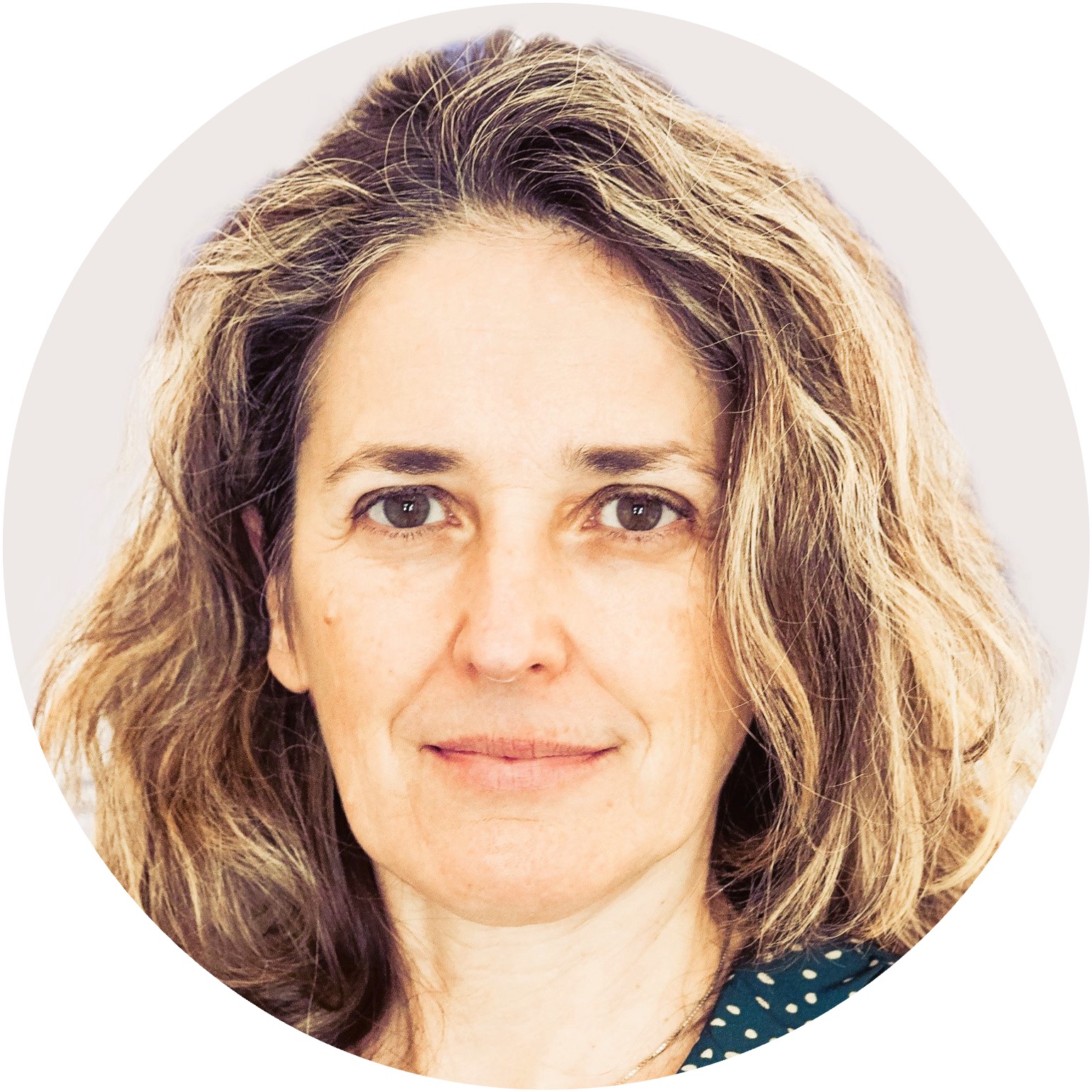
Education plays a vital role in strengthening Europe's response to infectious diseases and antimicrobial resistance (AMR). Yet its value extends far beyond the transfer of knowledge. To create lasting impact, education must support continuous learning, foster collaboration, and help connect people across disciplines, institutions, and countries.
For Despoina Koulenti, education is most effective when it brings individuals together. Through Ecraid's integrated research and education ecosystem, healthcare professionals and researchers gain access not only to expertise, but also to opportunities for exchange, collaboration, and professional growth. By creating spaces where knowledge, experience, and ideas can be shared, Ecraid helps build a community that supports the next generation of infectious disease and AMR leaders.
Meet Despoina Koulenti (right) and discover why education is not just about learning, but about creating the connections that turn knowledge into action.
Why is education critical in strengthening Europe’s response to ID & AMR?
Education is fundamental because without understanding the importance and impact of infectious diseases and antimicrobial resistance, effective implementation is not possible. Education should reach all healthcare professionals, as well as the wider public. Importantly, it should not be a one-off activity but part of continuous educational cycles that adapt to new evidence and emerging challenges.
What role do networks play in developing the next generation of experts?
Networks create an environment where knowledge, experience, and opportunities can be shared. They support the development of aspiring and motivated colleagues by providing mentorship, collaboration, and exposure to different perspectives and expertise. Within a supportive network, talented individuals can build confidence, expand their skills, and develop the professional relationships that will help them become the future leaders of our field.
How does Ecraid foster collaboration beyond individual courses or trainings?
Ecraid can foster collaboration in many ways beyond formal educational activities. It can facilitate research and educational exchanges, support short- and long-term visits to centres across the network, and promote collaborative educational programmes between institutions. It can also provide virtual educational and networking platforms where members contribute according to their specific expertise. These opportunities help build lasting relationships, encourage the sharing of best practices, and create collaborations that continue long after a course or training event has ended.
What motivates you to stay involved in education initiatives?
What motivates me most is the interaction with experts and colleagues from different backgrounds. I enjoy the opportunity to exchange ideas and brainstorm innovative approaches to developing effective and sustainable educational initiatives. I strongly believe that knowledge should not remain within a small group but should be transferred to the next generation. Equally important is the bidirectional exchange between senior and junior colleagues. We all have something to learn from each other, and those interactions are often among the most rewarding aspects of education.
How can early-career researchers benefit from being part of a community like Ecraid?
Early-career researchers gain access to expertise from multiple disciplines and countries. Beyond courses, they have opportunities to collaborate, find mentors, participate in research projects, and experience different research environments. Being part of such a community helps them build skills, confidence, professional networks, and gives them a sense of belonging.
What makes Ecraid’s ecosystem unique compared to other initiatives?
What makes Ecraid unique is the integration of research and education within the same ecosystem. It combines a broad European network with a wide variety of expertise, creating opportunities not only to learn but also to collaborate, conduct research, and translate knowledge into practice.
How do you see the future of education evolving in ID & AMR?
I believe the future of education in infectious diseases and antimicrobial resistance will combine the strengths of both online and face-to-face learning. Digital platforms and virtual environments will increase access and allow more tailored educational opportunities, while hands-on training and periods of onsite learning in expert centres will remain essential. Education will need to address the needs of different audiences, including healthcare professionals, researchers, policymakers, and the public, ensuring that knowledge can be translated into meaningful action.